Living with other people is hard
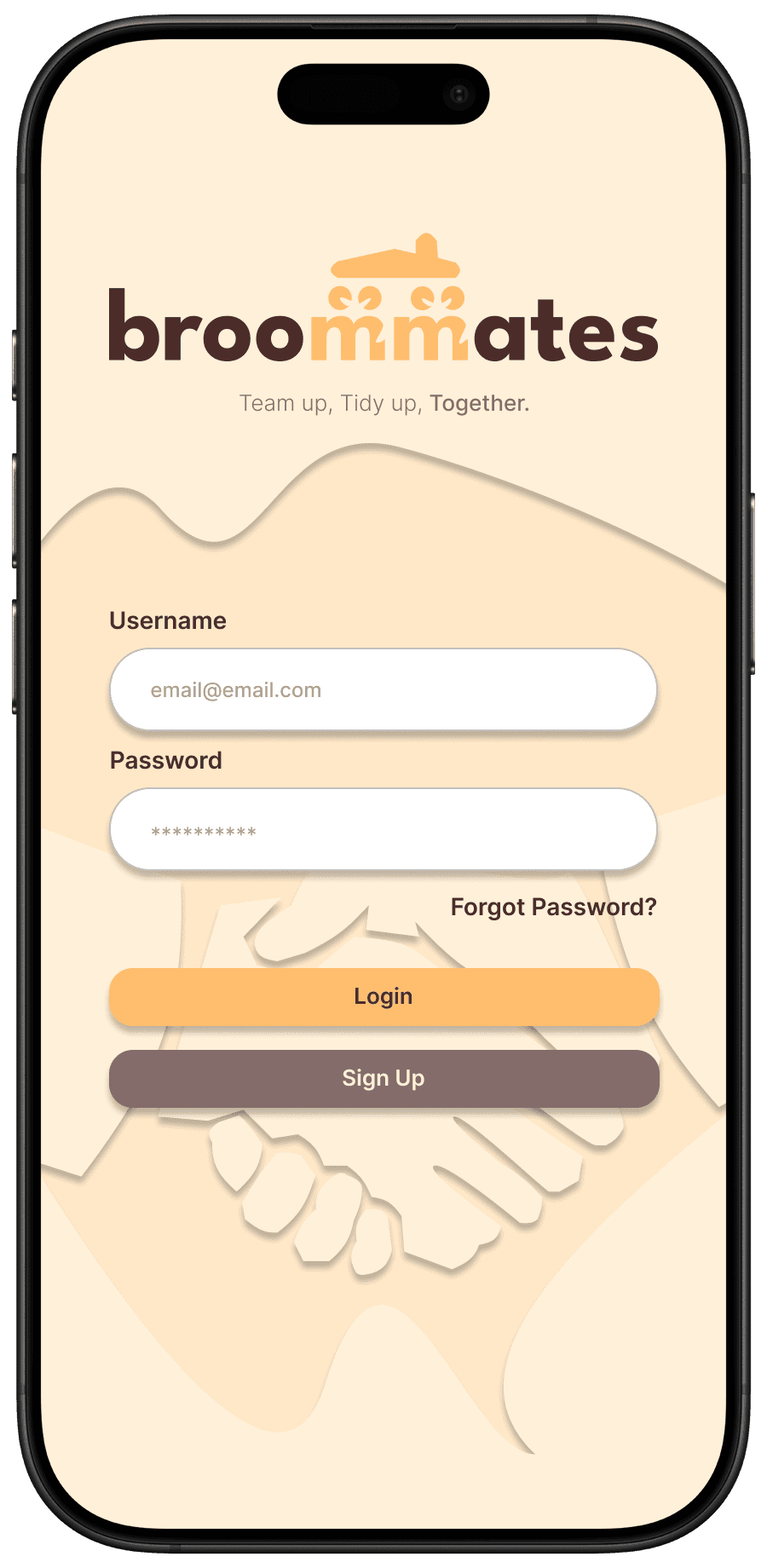
Dishes pile up, communication slips, and small tensions turn into big ones. Broommates is a concept app that helps roommates coordinate chores, communicate clearly, and live together with less stress.
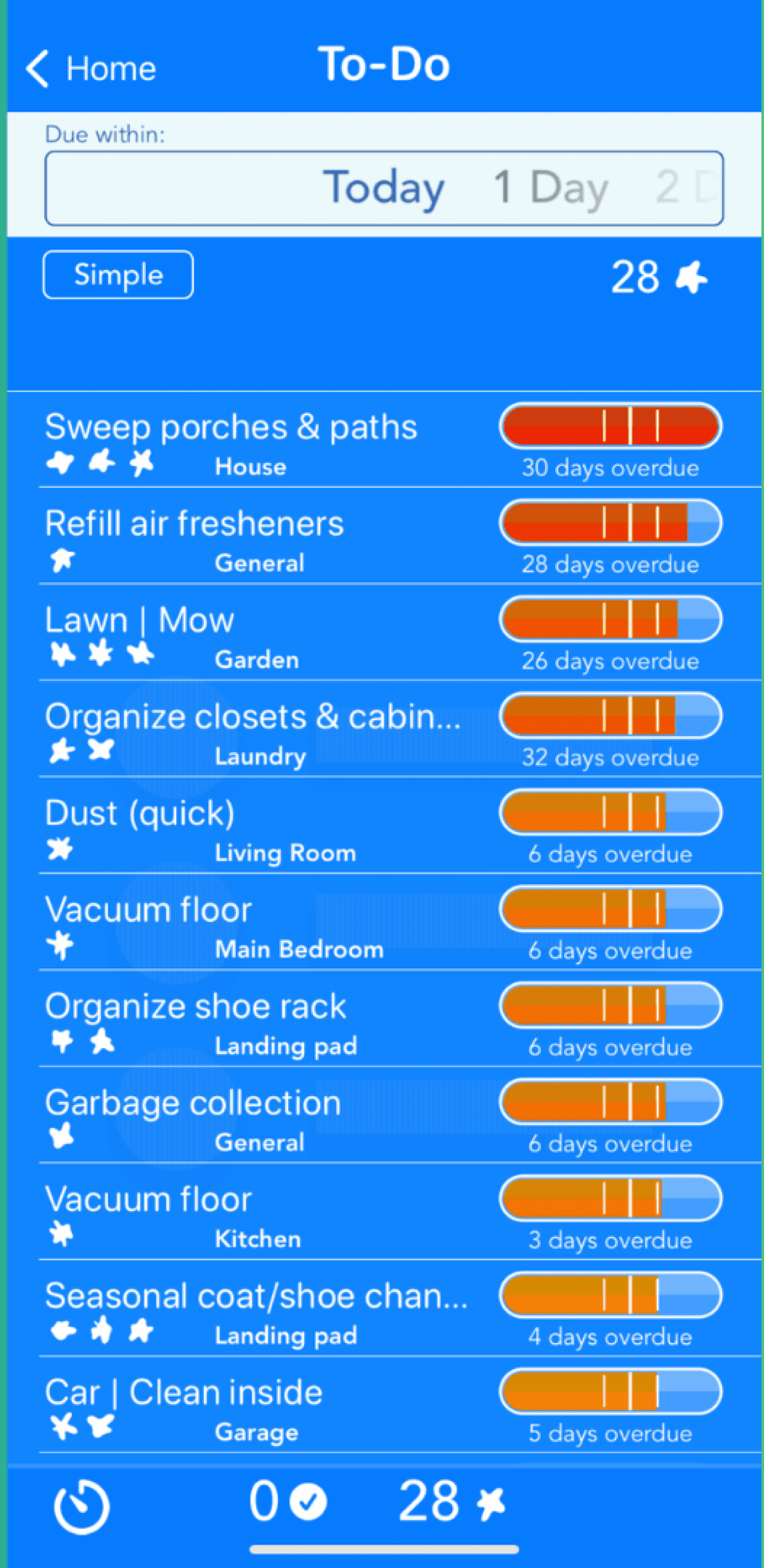
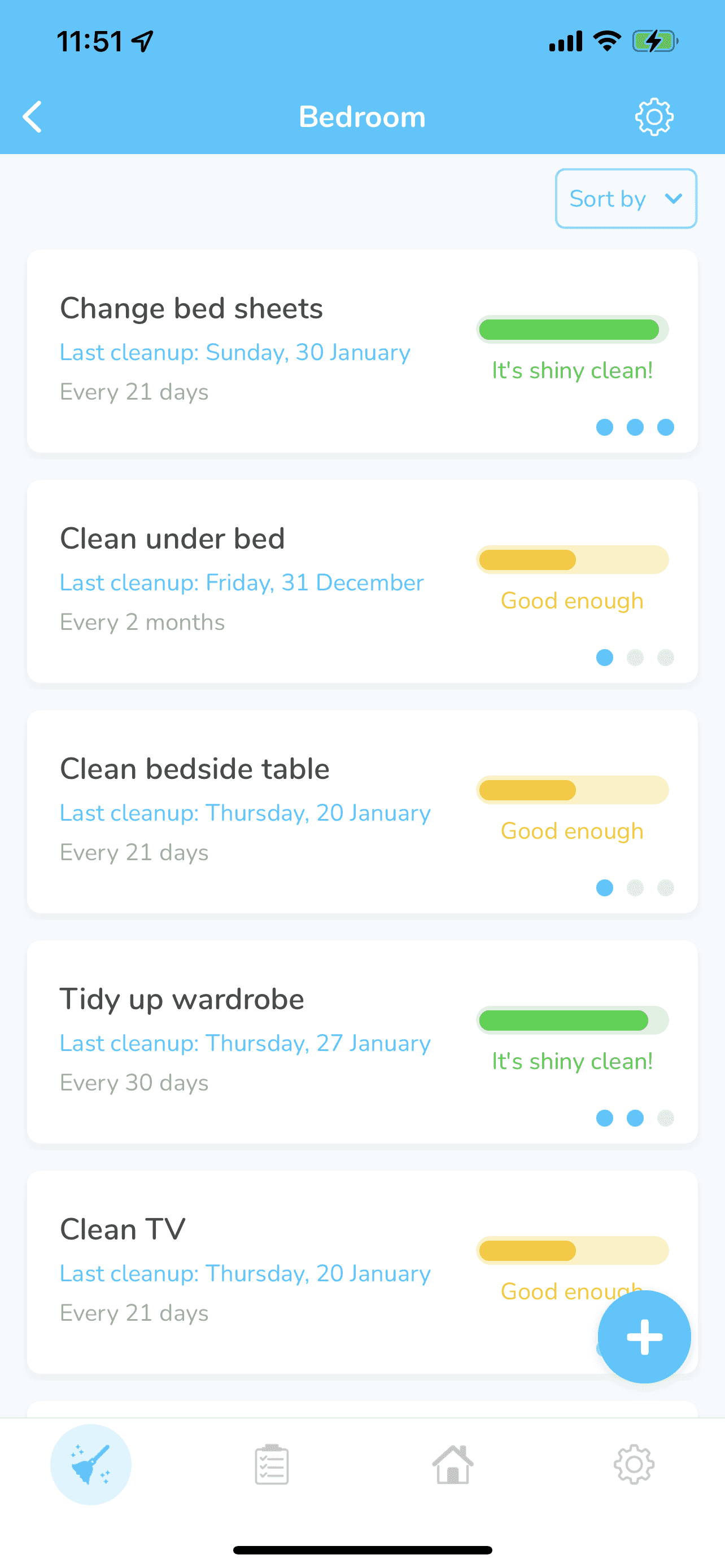
For insights in the chore app space, I asked 10 friends to use two chore apps (Sweepy and Tody) for one week and to rate their experiences.
Living with other people is hard
Dishes pile up, communication slips, and small tensions turn into big ones. Broommates is a concept app that helps roommates coordinate chores, communicate clearly, and live together with less stress.
For insights in the chore app space, I asked 10 friends to use two chore apps (Sweepy and Tody) for one week and to rate their experiences.
The problems with competitor apps were:
"I feel like I'm the only one doing stuff"
Competitor applications show progress for chore completion, but make individual user contributions ambiguous. Some users need to know that they're not the only ones pulling the weight. When users feel like they're apart of a team and not someone's personal cleaner, they're more likely to cooperate.
"It needs to be more than just a checklist"
Competitor applications do just fine when it comes to giving users a list of things to check off, but fall short when it comes to creating familiarity and kinship amongst users. Its harder for users to care for the space they live in if they don't care about the people they live with.
"These points don't mean anything to me"
Competitor applications give points to users when they complete chores. However, when users don't care about receiving points, they won't care about doing chores. Instead of arbitrary points, there needs to be a more meaningful way to motivate users.
The problems with competitor apps were:
"I feel like I'm the only one doing stuff"
Competitor applications show progress for chore completion, but make individual user contributions ambiguous. Some users need to know that they're not the only ones pulling the weight. When users feel like they're apart of a team and not someone's personal cleaner, they're more likely to cooperate.
"It needs to be more than just a checklist"
Competitor applications do just fine when it comes to giving users a list of things to check off, but fall short when it comes to creating familiarity and kinship amongst users. Its harder for users to care for the space they live in if they don't care about the people they live with.
"These points don't mean anything to me"
Competitor applications give points to users when they complete chores. However, when users don't care about receiving points, they won't care about doing chores. Instead of arbitrary points, there needs to be a more meaningful way to motivate users.

Tody

Sweepy
Planting chore contribution in user flow
"I feel like I'm the only one doing stuff"
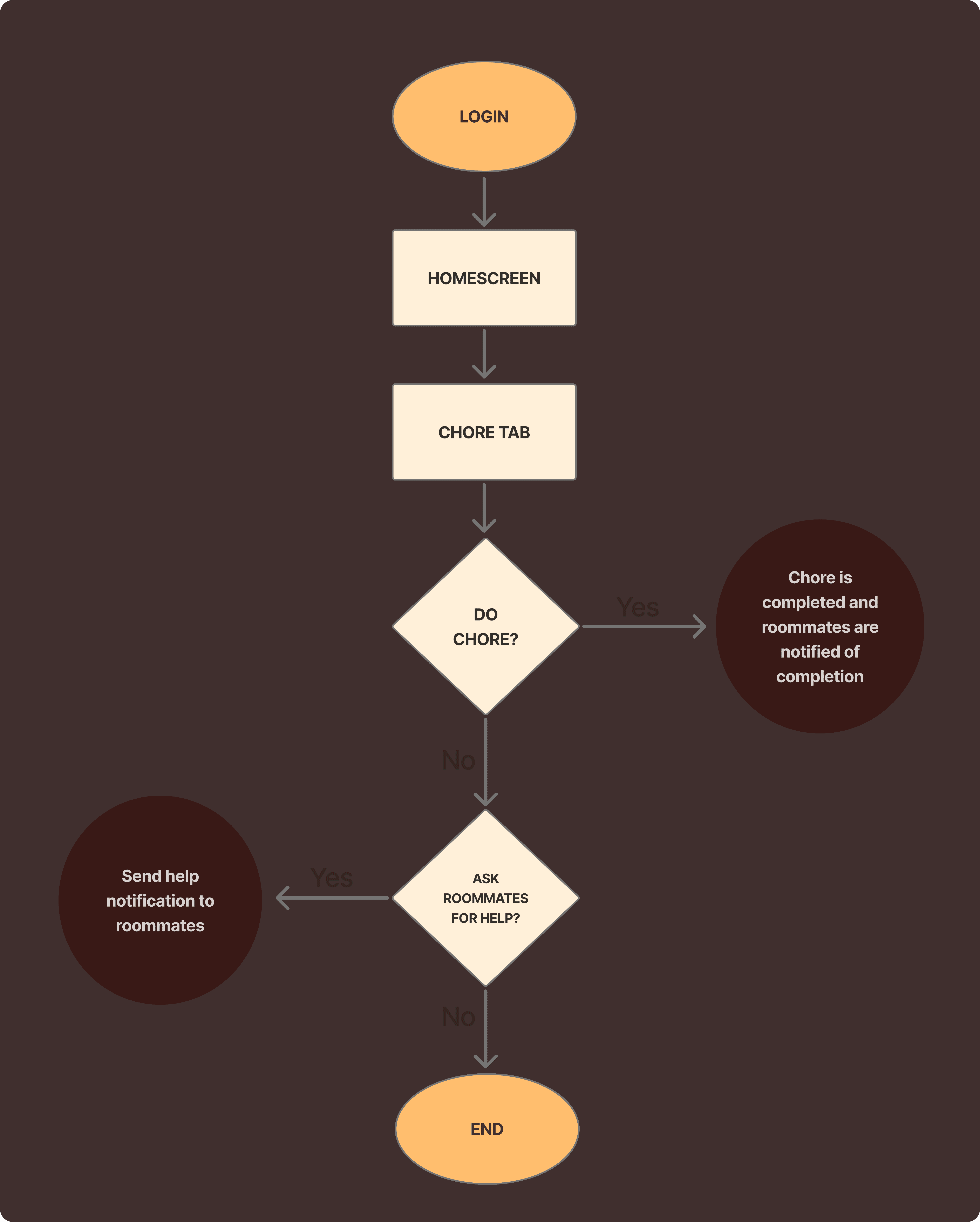
Based on user interviews, users are more willing to cooperate when they feel like their roommates are also contributing. The user flow for Broommates needed to include an organic way for users to create this feeling amongst themselves.
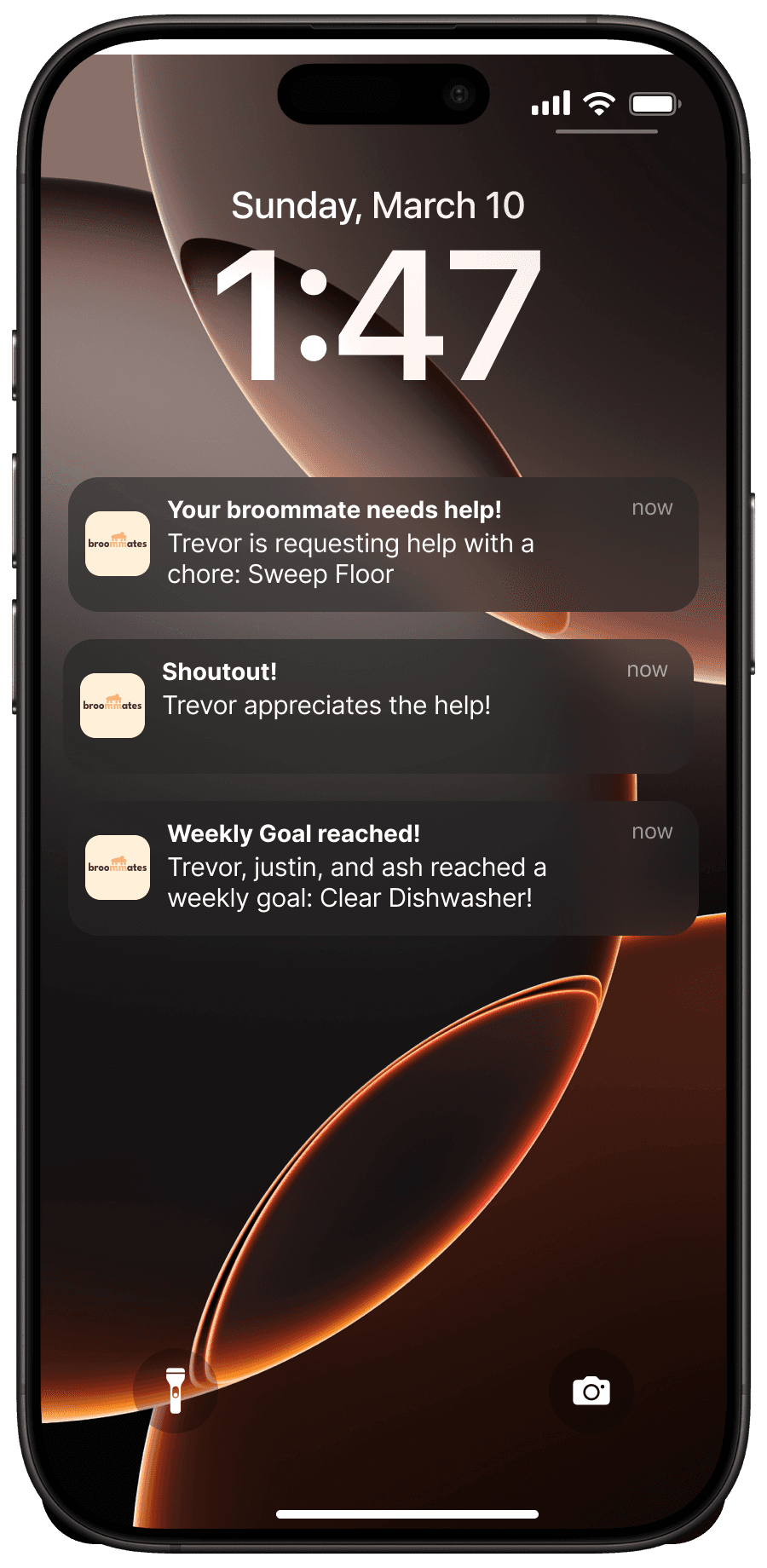
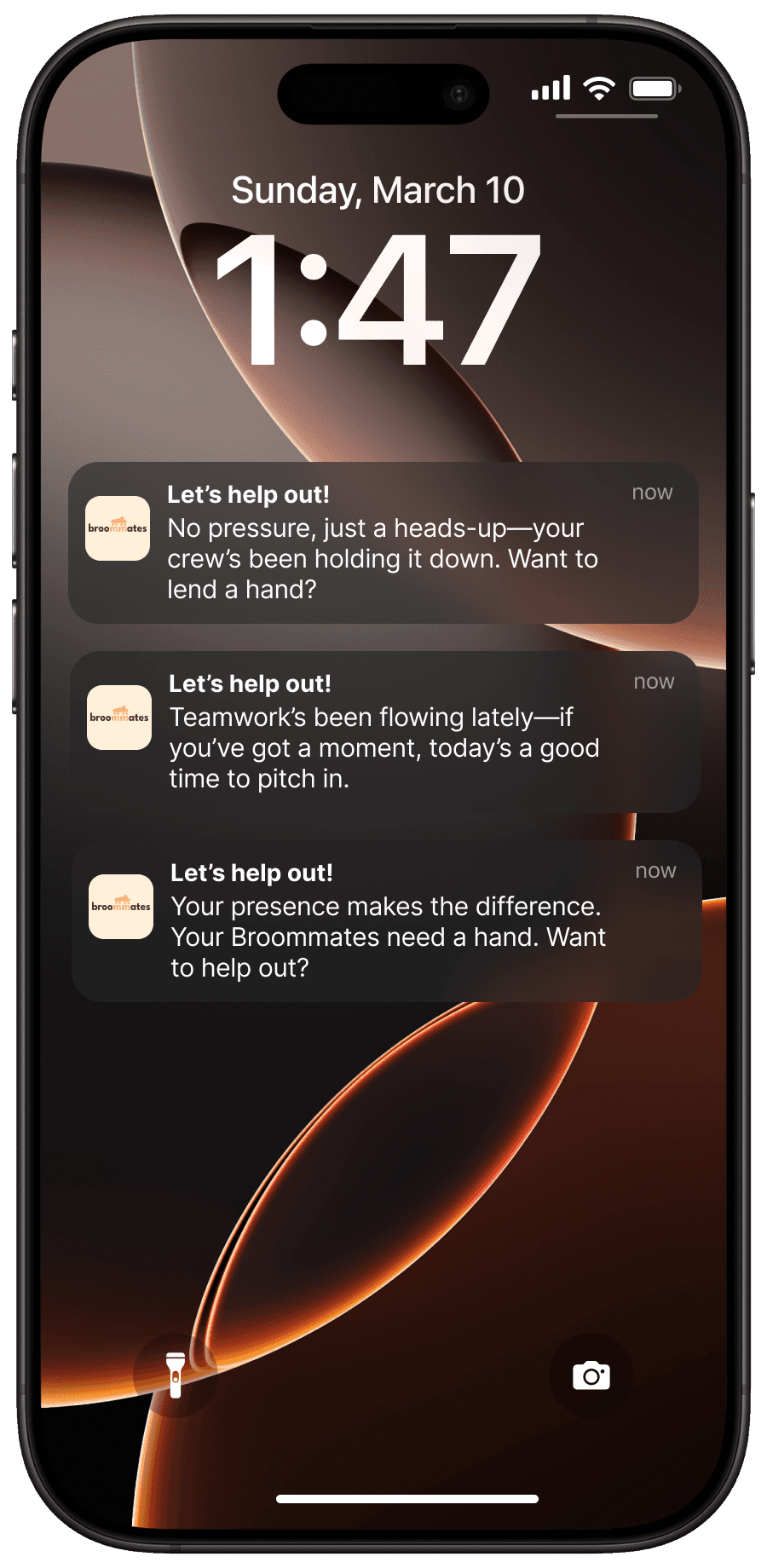
At the chore decision point, roommates are sent a congratulatory notification if the chore is completed by the user. If not, the user has the option to send a help notification out to their roommates.
Either way, notifying users when:
someone is helping out
when someone is asking for help
nullifies the idea that any one person is doing all the heavy lifting.
Planting chore contribution in user flow
"I feel like I'm the only one doing stuff"
Based on user interviews, users are more willing to cooperate when they feel like their roommates are also contributing. The user flow for Broommates needed to include an organic way for users to create this feeling amongst themselves.
At the chore decision point, roommates are sent a congratulatory notification if the chore is completed by the user. If not, the user has the option to send a help notification out to their roommates.
Either way, notifying users when:
someone is helping out
when someone is asking for help
nullifies the idea that any one person is doing all the heavy lifting.
Goals from User Desires:
"I feel like I'm the only one doing stuff"
Goal: establish a way feeling for users to feel contribution from their roommates.
"It needs to be more than just a checklist"
Goal: move away from just being a checklist and design a way for users to connect.
"These points don't mean anything to me"
Goal: create a meaningful chore system to motivate users.
Moving away from the check-list
"It needs to be more than just a checklist"
While some users enjoyed checking things off, others needed a sense of social accountability and connection to stay engaged.
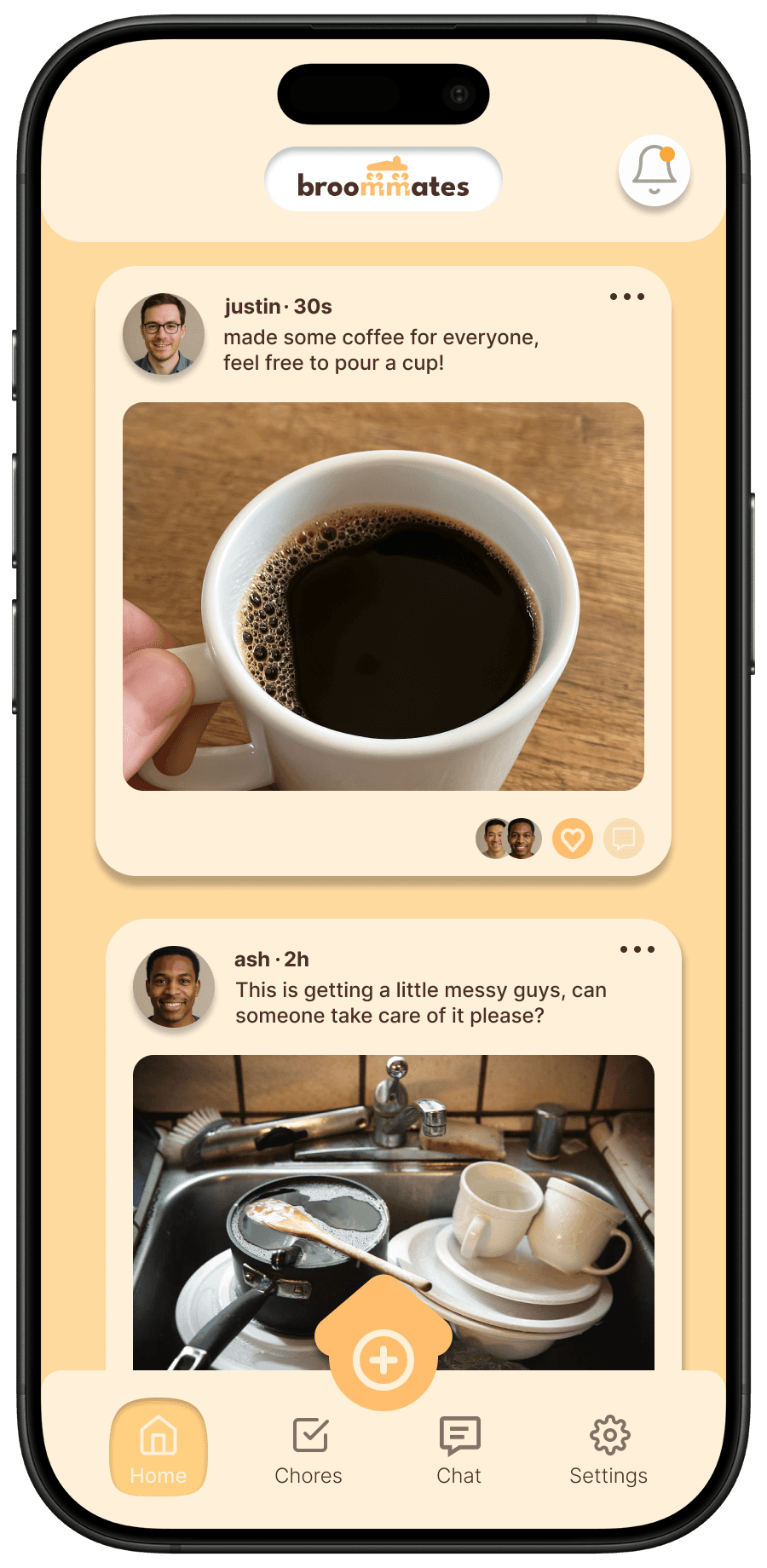
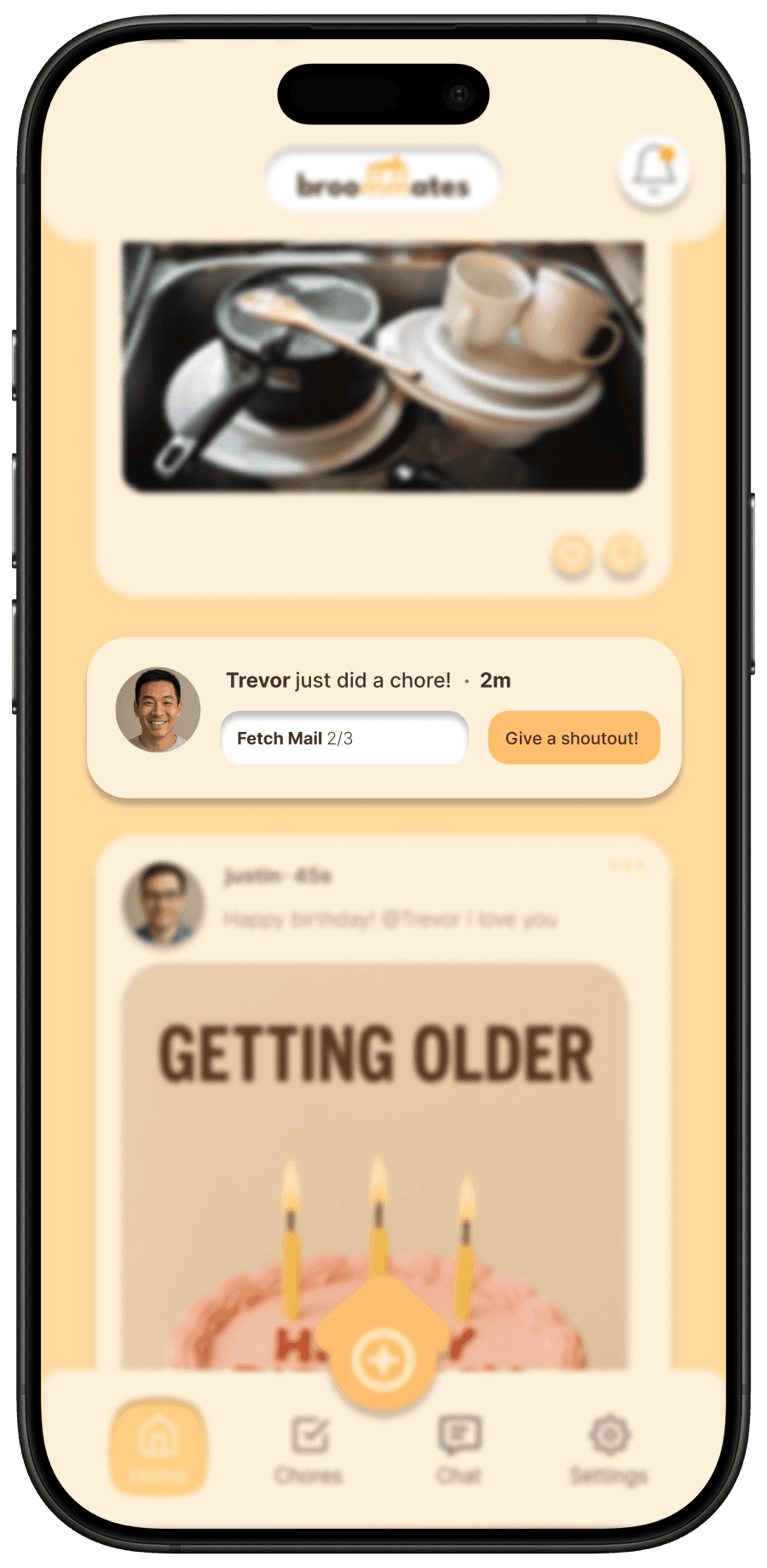
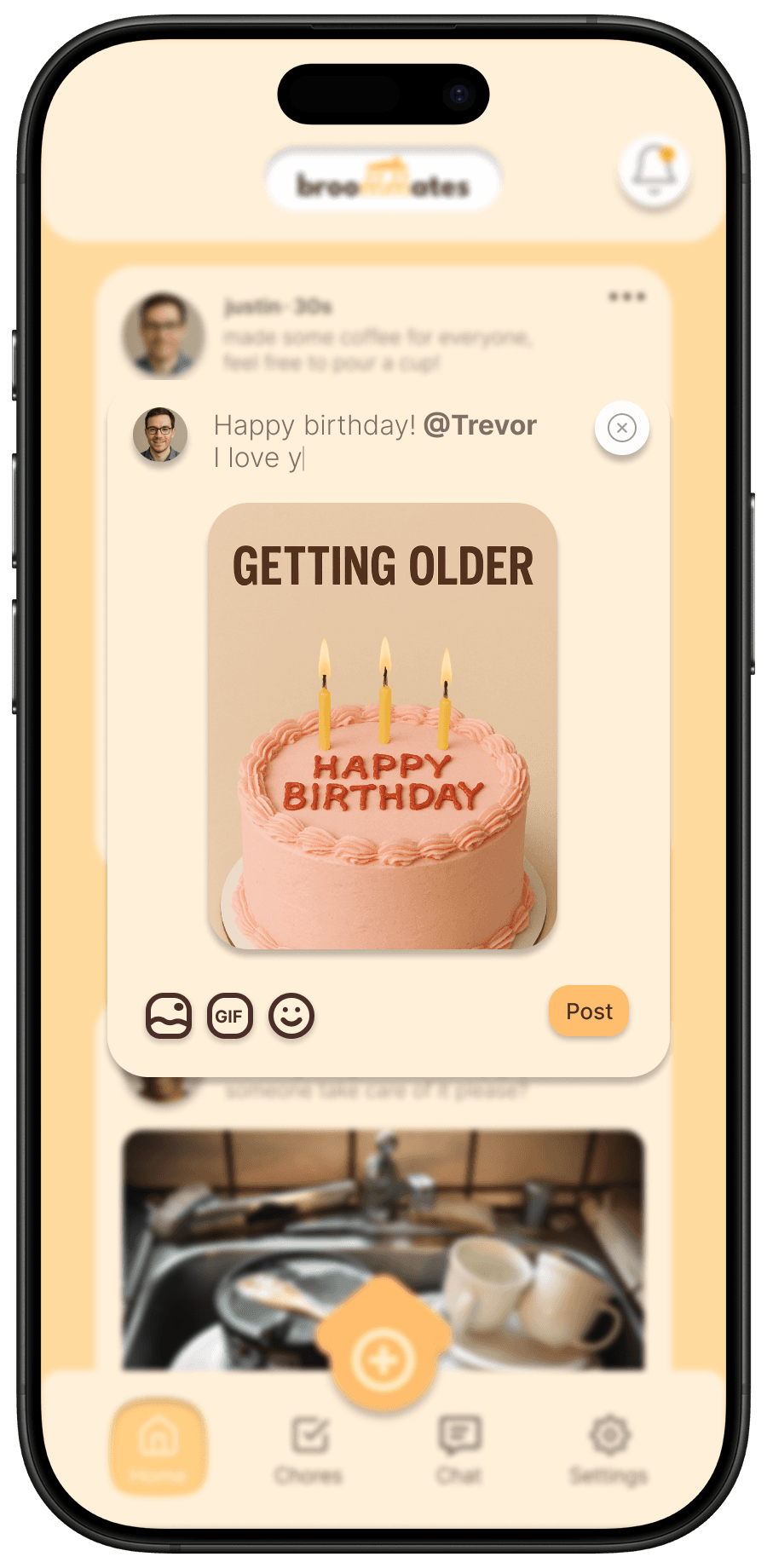
To address this, I introduced a social feed into the app. Inspired by existing social media patterns, this feature allowed users to post updates, share their day-to-day, and support one another. This simple shift transformed the app from a task manager into a space for shared experience.
When social connections are formed first, the process of coming together and cooperating becomes much easier.
Moving away from the check-list
"It needs to be more than just a checklist"
While some users enjoyed checking things off, others needed a sense of social accountability and connection to stay engaged.
To address this, I introduced a social feed into the app. Inspired by existing social media patterns, this feature allowed users to post updates, share their day-to-day, and support one another. This simple shift transformed the app from a task manager into a space for shared experience.
When social connections are formed first, the process of coming together and cooperating becomes much easier.
Recognition over gamification
"These points don't mean anything to me"
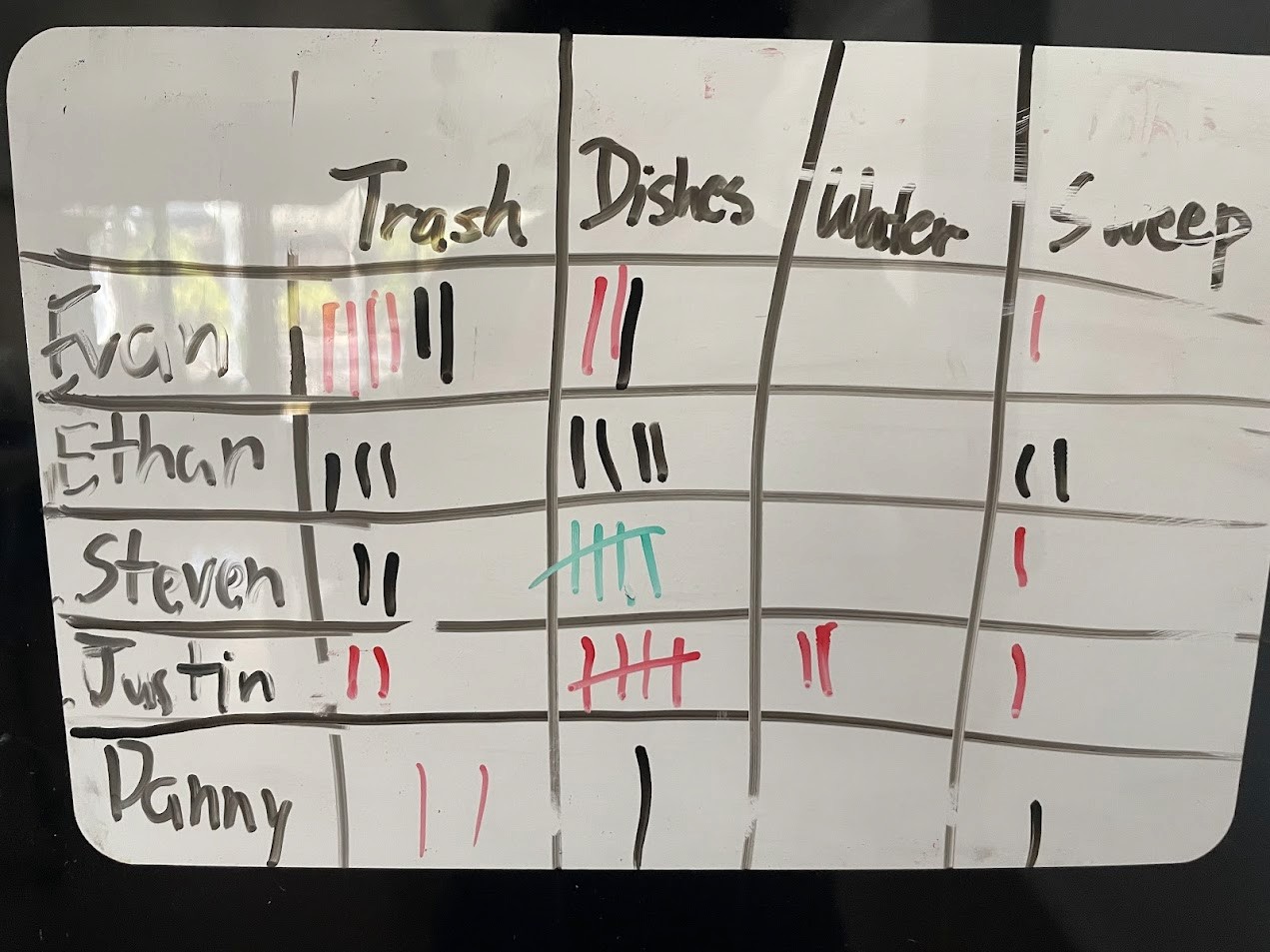
Users don't care about getting points for their contributions, but they do care about getting recognized for them.
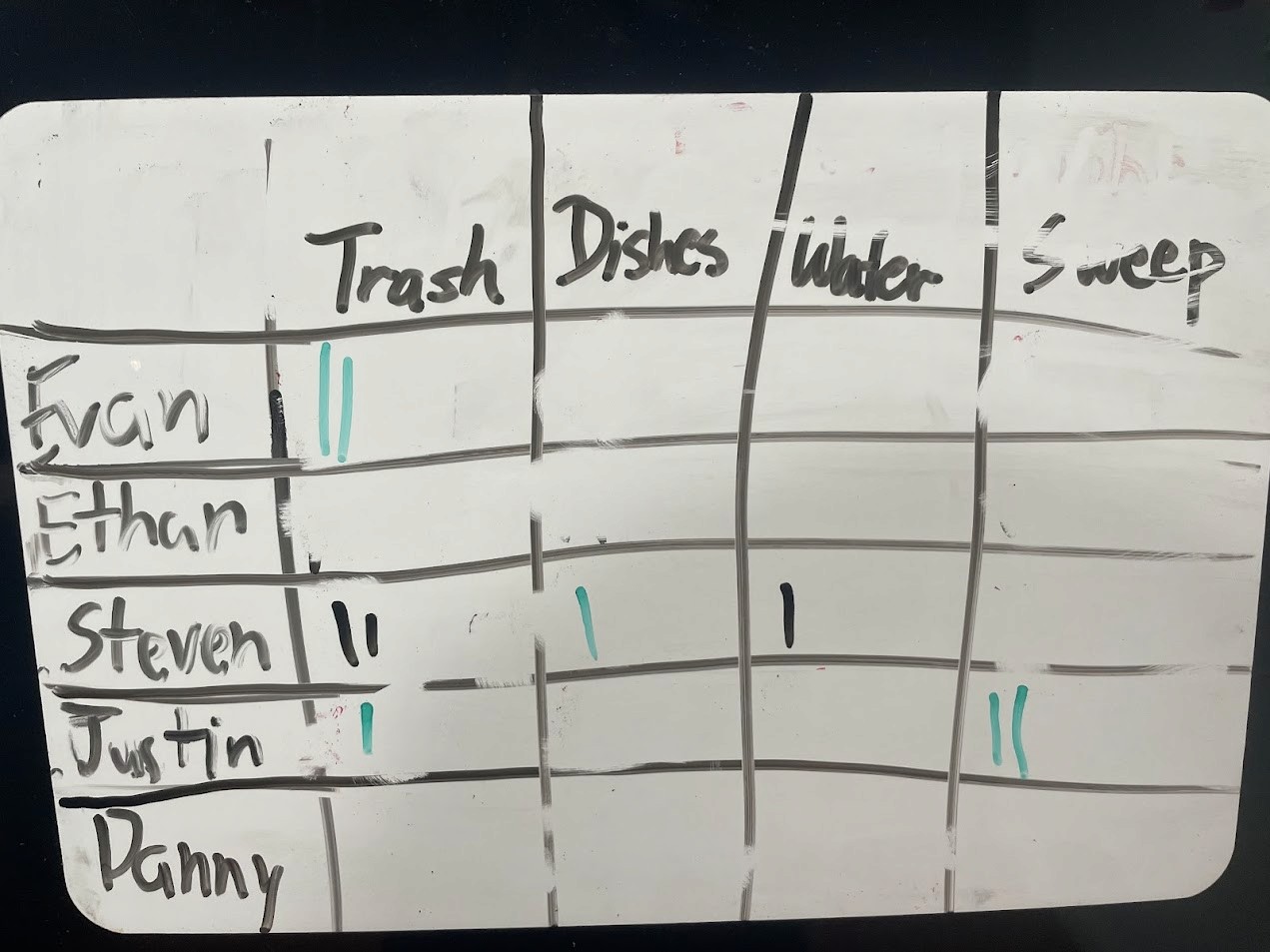
The paper prototype (right image) I set up with my own roommates had an arbitrary point system and yet—they still did the chores.
It wasn’t the points themselves that motivated action. It was the visibility of their name next to the task and the understanding that their effort contributed to a shared mission.
Recognition fuels motivation more than gamification. Points alone feel hollow, but when paired with identity and purpose, they become a symbol of progress and teamwork.
Recognition over gamification
"These points don't mean anything to me"
Users don't care about getting points for their contributions, but they do care about getting recognized for them.
The paper prototype (right image) I set up with my own roommates had an arbitrary point system and yet—they still did the chores.
It wasn’t the points themselves that motivated action. It was the visibility of their name next to the task and the understanding that their effort contributed to a shared mission.
Recognition fuels motivation more than gamification. Points alone feel hollow, but when paired with identity and purpose, they become a symbol of progress and teamwork.
Team up, Tidy up, Together
Team up, Tidy up, Together
Improving cooperation and teamwork amongst roommates with user-centered design
Project Type: Concept App
Role: Solo Designer
Industry: Home and Lifestyle
Duration: Q2, 2025
Design Choices
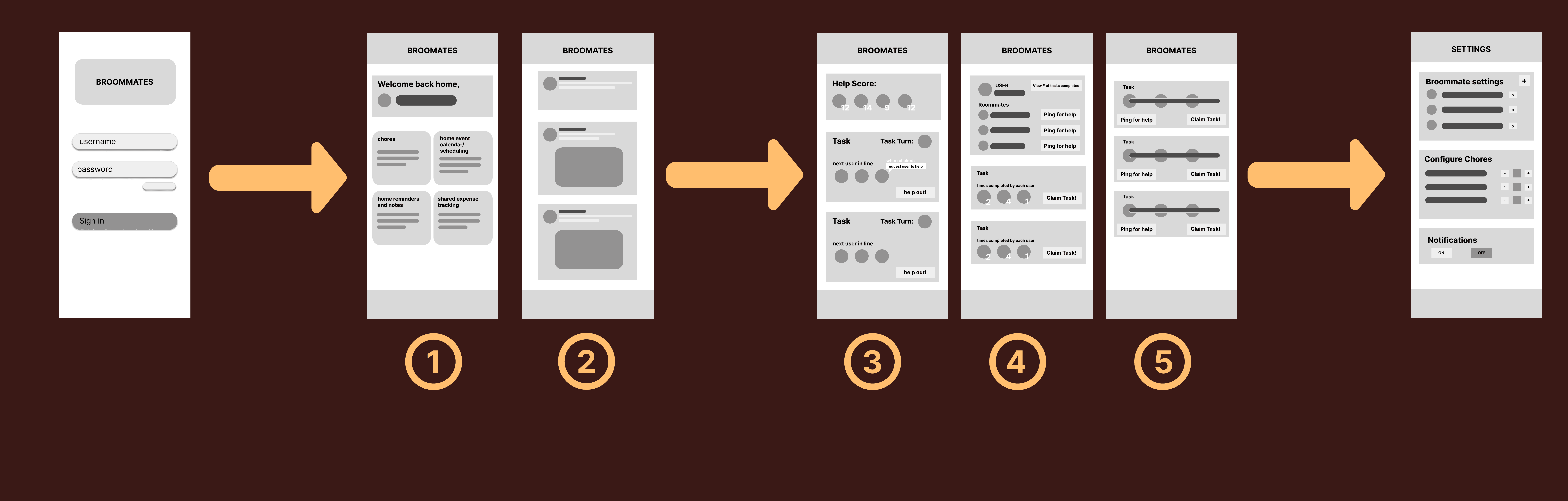
Screen 1 is the original dashboard and had features like expense splitting, reminders, and event scheduling.
Screen 2, the social feed, was chosen over this mainly due to user interviews stating that these features were already being taken care of by other apps (Venmo, group chat, etc).
Screens 3 and 4 are proposed designs for chore systems and were scrapped because their designs were more scoreboard-like and promoted competition instead of teamwork.
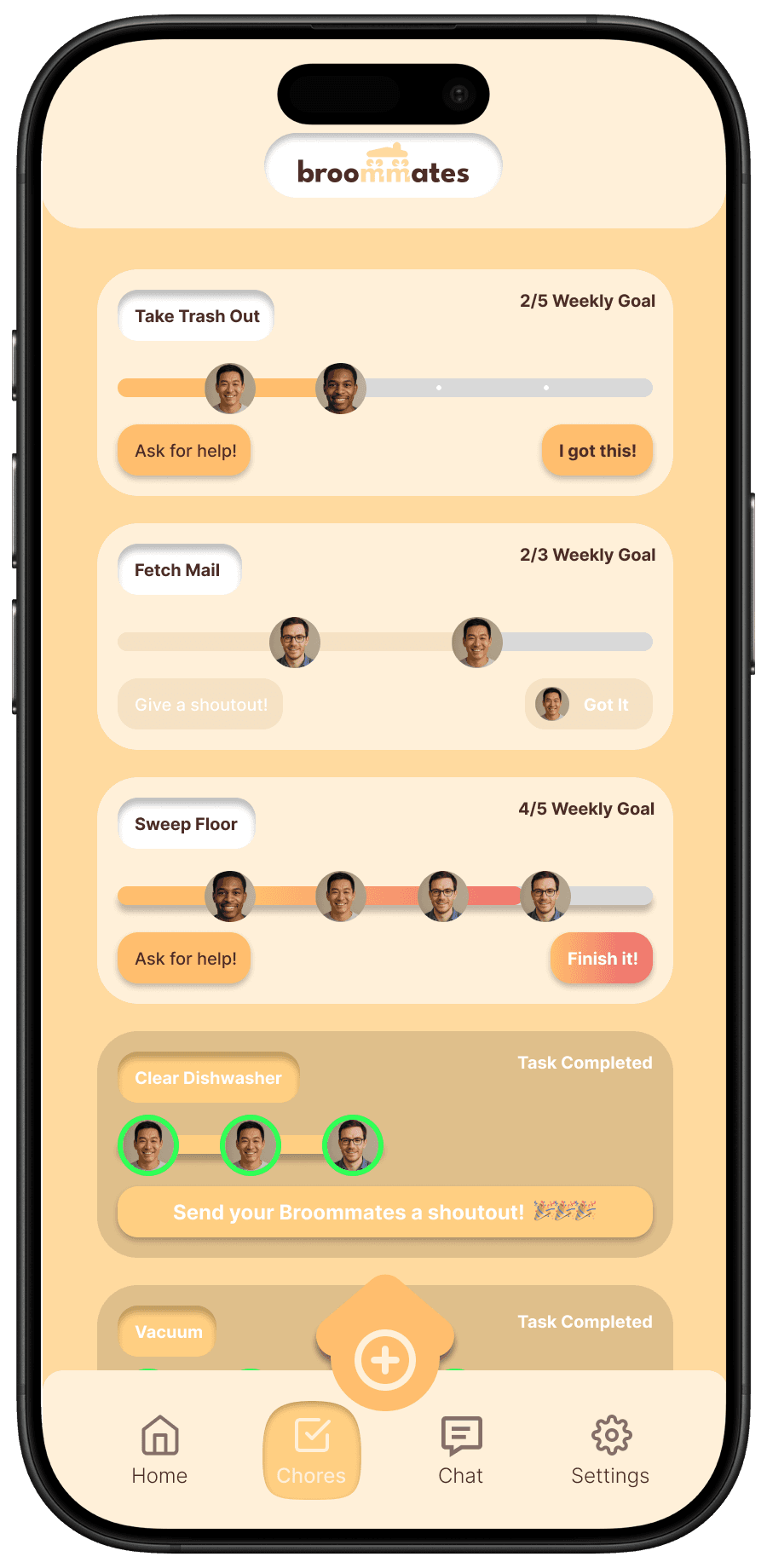
Screen 5 introduces a redesigned chore interface that focuses on collaboration rather than individual performance. Task completion is displayed on a progress bar with ticks. Users do tasks to move the bar forward, placing their profile picture on top of the tick when completing a task.
Final Design
Broommates turns everyday chores into a shared experience by blending accountability, connection, and meaningful motivation. By focusing on teamwork over task lists and gamification, it helps roommates build a more cooperative, respectful home.
Final Design
Broommates turns everyday chores into a shared experience by blending accountability, connection, and meaningful motivation. By focusing on teamwork over task lists and gamification, it helps roommates build a more cooperative, respectful home.
Learning is fun
With Broommates, I learned that good design isn't just about adding functionality, it's about understanding what motivates people in real, everyday situations.
Reflections
I would have liked to test the final design with real users. While I’m confident in the direction I took, I recognize that every solution has flaws that only surface through real-world feedback.
Designing for cooperation requires empathy, not just efficiency and that mindset shaped every decision I made in this process.
Team up, Tidy up, Together
Improving cooperation and teamwork amongst roommates with user-centered design
Project Type: End to end application + Branding
Role: Solo Designer
Industry: Home and Lifestyle
Duration: Q2, 2025
Living with other people is hard
Dishes pile up, communication slips, and small tensions turn into big ones. Broommates is a concept app that helps roommates coordinate chores, communicate clearly, and live together with less stress.
For insights in the chore app space, I asked 10 friends to use two chore apps (Sweepy and Tody) for one week and to rate their experiences.
The problems with competitor apps were:
"I feel like I'm the only one doing stuff"
Competitor applications show progress for chore completion, but make individual user contributions ambiguous. Some users need to know that they're not the only ones pulling the weight. When users feel like they're apart of a team and not someone's personal cleaner, they're more likely to cooperate.
"It needs to be more than just a checklist"
Competitor applications do just fine when it comes to giving users a list of things to check off, but fall short when it comes to creating familiarity and kinship amongst users. Its harder for users to care for the space they live in if they don't care about the people they live with.
"These points don't mean anything to me"
Competitor applications give points to users when they complete chores. However, when users don't care about receiving points, they won't care about doing chores. Instead of arbitrary points, there needs to be a more meaningful way to motivate users.
Goals from User Desires:
"I feel like I'm the only one doing stuff"
Goal: establish a way feeling for users to feel contribution from their roommates.
"It needs to be more than just a checklist"
Goal: move away from just being a checklist and design a way for users to connect.
"These points don't mean anything to me"
Goal: create a meaningful chore system to motivate users.
Moving away from the check-list
"It needs to be more than just a checklist"
While some users enjoyed checking things off, others needed a sense of social accountability and connection to stay engaged.
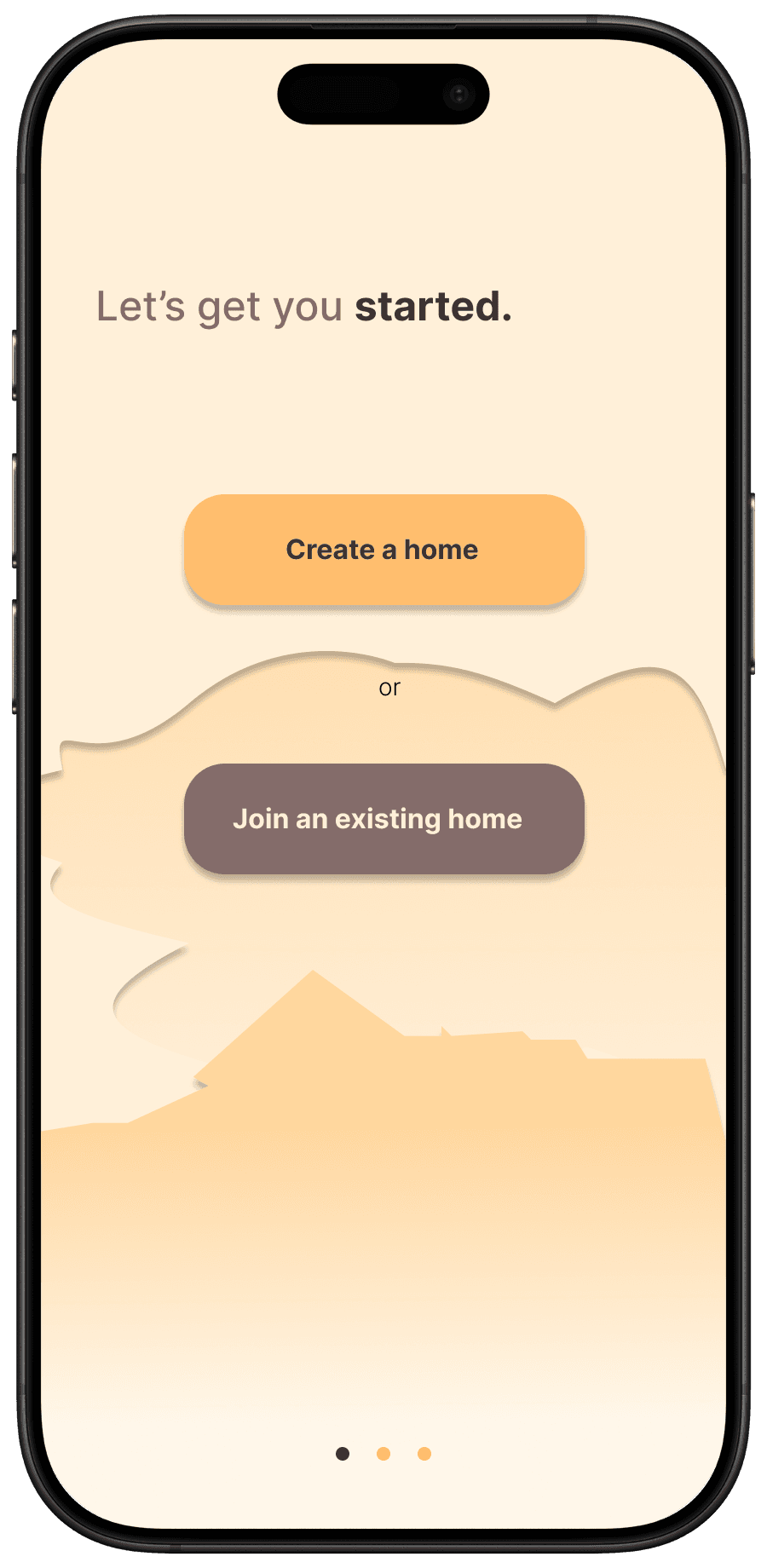
To address this, I introduced a social feed into the app. Inspired by existing social media patterns, this feature allowed users to post updates, share their day-to-day, and support one another. This simple shift transformed the app from a task manager into a space for shared experience.
When social connections are formed first, the process of coming together and cooperating becomes much easier.
Design Choices
Screen 1 is the original dashboard and had features like expense splitting, reminders, and event scheduling.
Screen 2, the social feed, was chosen over this mainly due to user interviews stating that these features were already being taken care of by other apps (Venmo, group chat, etc).
Screens 3 and 4 are proposed designs for chore systems and were scrapped because their designs were more scoreboard-like and promoted competition instead of teamwork.
Screen 5 introduces a redesigned chore interface that focuses on collaboration rather than individual performance. Task completion is displayed on a progress bar with ticks. Users do tasks to move the bar forward, placing their profile picture on top of the tick when completing a task.
Final Design
Broommates turns everyday chores into a shared experience by blending accountability, connection, and meaningful motivation. By focusing on teamwork over task lists and gamification, it helps roommates build a more cooperative, respectful home.
Learning is fun
With Broommates, I learned that good design isn't just about adding functionality, it's about understanding what motivates people in real, everyday situations.
Reflections
I would have liked to test the final design with real users. While I’m confident in the direction I took, I recognize that every solution has flaws that only surface through real-world feedback.
Designing for cooperation requires empathy, not just efficiency and that mindset shaped every decision I made in this process.
Final Screens
back to top
Planting chore contribution in user flow
"I feel like I'm the only one doing stuff"
Based on user interviews, users are more willing to cooperate when they feel like their roommates are also contributing. The user flow for Broommates needed to include an organic way for users to create this feeling amongst themselves.
At the chore decision point, roommates are sent a congratulatory notification if the chore is completed by the user. If not, the user has the option to send a help notification out to their roommates.
Either way, notifying users when:
someone is helping out
when someone is asking for help
nullifies the idea that any one person is doing all the heavy lifting.
Recognition over gamification
"These points don't mean anything to me"
Users don't care about getting points for their contributions, but they do care about getting recognized for them.
The paper prototype (above image) I set up with my own roommates had an arbitrary point system and yet—they still did the chores.
It wasn’t the points themselves that motivated action. It was the visibility of their name next to the task and the understanding that their effort contributed to a shared mission.
Recognition fuels motivation more than gamification. Points alone feel hollow, but when paired with identity and purpose, they become a symbol of progress and teamwork.